Exploring the Orchids of Vietnam through a Monograph by Prof. Leonid V. Averyanov and Colleagues
13/11/2026With its wealth of color photographs, botanical illustrations, and data accumulated over many years of research, Orchids of Vietnam in Color and Graphics offers a rich view of Vietnam’s orchids. The monograph also bears witness to the sustained contributions of Prof. Leonid V. Averyanov, Doctor of Sciences, and his Vietnamese and international colleagues to the study, identification, and conservation of plant diversity.
 A Comprehensive Work on Vietnam’s Orchids
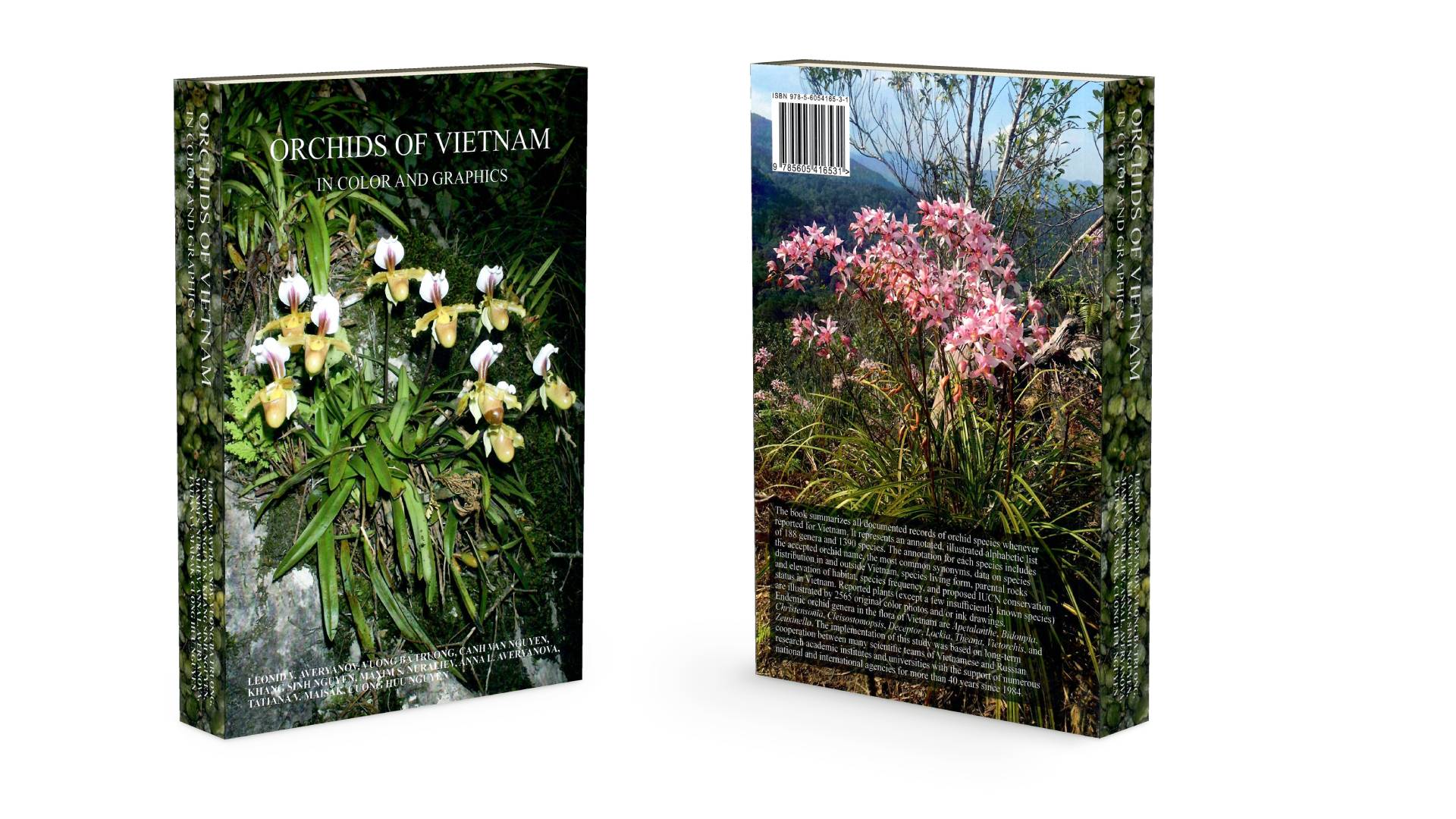
Orchids of Vietnam in Color and Graphics was published by the Komarov Botanical Institute of the Russian Academy of Sciences in Saint Petersburg in 2025. The 589-page monograph was written by eight authors, with Leonid V. Averyanov listed first.
The work covers 1,391 species in 188 genera and includes 2,565 original color photographs and illustrations. These figures convey the scale of the effort to organize the available material and point to the remarkable diversity of the orchid family in Vietnam’s flora.
The book builds on a checklist published by Averyanov and Averyanova in 2003, which recorded 900 species in 158 genera. Over the following two decades, surveys in areas that had previously been difficult to access yielded many discoveries. The monograph draws on earlier findings, incorporates subsequent publications, and compares specimens collected from 2002 up to the time of compilation and held by scientific institutions in Vietnam and abroad.
Notably, the book describes seven species new to science and records one genus and 38 species for the first time in the flora of Vietnam. These are distinct contributions: the description of species previously unknown to science and the documentation of species already known elsewhere but not previously recorded in Vietnam.
Fro the Beauty of Orchids to Data for Conservation
The book’s visual material is one of its main attractions. Color photographs show plants in their natural habitats and reveal the appearance of their flowers; botanical drawings clarify the morphological details needed to compare and distinguish species. Together, they allow researchers and nature enthusiasts to approach the world of orchids from complementary perspectives.
Each image is accompanied by a consistently organized set of information: the accepted scientific name, principal synonyms, distribution, growth habit, characteristics of the underlying rock or substrate, elevation, frequency of occurrence, an assessment of conservation status under IUCN criteria, and references.
Readers can therefore understand an orchid species in relation to its environment. Information on habitats, distribution ranges, and rarity also provides a basis for identifying priorities for further research, monitoring, and conservation.
Another valuable feature is the link to specimen data. In the PDF edition, species names are linked to studied specimens in the Komarov Botanical Institute’s Herbarium LE database. This arrangement lets readers move from a page of the book to the underlying specimen evidence, making the material easier to verify and use in research.
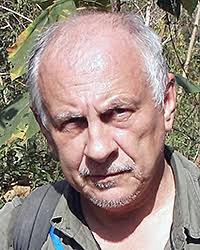
Prof. Doctor of Sciences Leonid Vladimirovich Averyanov, born in 1955, is President of the Russian Botanical Society, Head of the Higher Plant Herbarium Department at the Komarov Botanical Institute of the Russian Academy of Sciences, and Editor-in-Chief of Botanicheskii Zhurnal (Botanical Journal). He graduated from Leningrad State University in 1977, earned his Doctor of Sciences degree in 1991, and was awarded the title of professor in 1999. His research encompasses taxonomy, systematics, plant geography, and conservation, with a particular interest in orchids. He and his colleagues have published more than 500 scientific works on orchids.
A Record of Cooperation with the Vietnam-Russia Tropical Centre
In his research on Vietnam’s flora, Prof. Averyanov has worked with researchers in Vietnam, including scientists associated with the Vietnam–Russia Tropical Centre such as A.N. Kuznetsov, S.P. Kuznetsova, and M.S. Nuraliev. Their collaboration is reflected in joint publications, specimen data, and field surveys.
Within the framework of the joint Vietnam–Russia research project E-1.2, Averyanov, Nuraliev, Kuznetsov, and Kuznetsova published a description of the orchid Vietorchis furcata in Taiwania in 2013. The paper introduced a chlorophyll-free orchid species new to science, based on a type specimen collected in Chu Yang Sin National Park. In 2019, Averyanov co-authored a paper in Wulfenia with Nuraliev, Kuznetsov, and Kuznetsova summarizing research conducted at the Vietnam–Russia Tropical Centre from 2009 to 2018. It recorded 29 species in seven families, including 16 orchid species. The material came from the Centre’s surveys in several national parks and nature reserves. These publications illustrate the value of Vietnam–Russia scientific cooperation: field discoveries are studied, verified, and shared with the international scientific community.
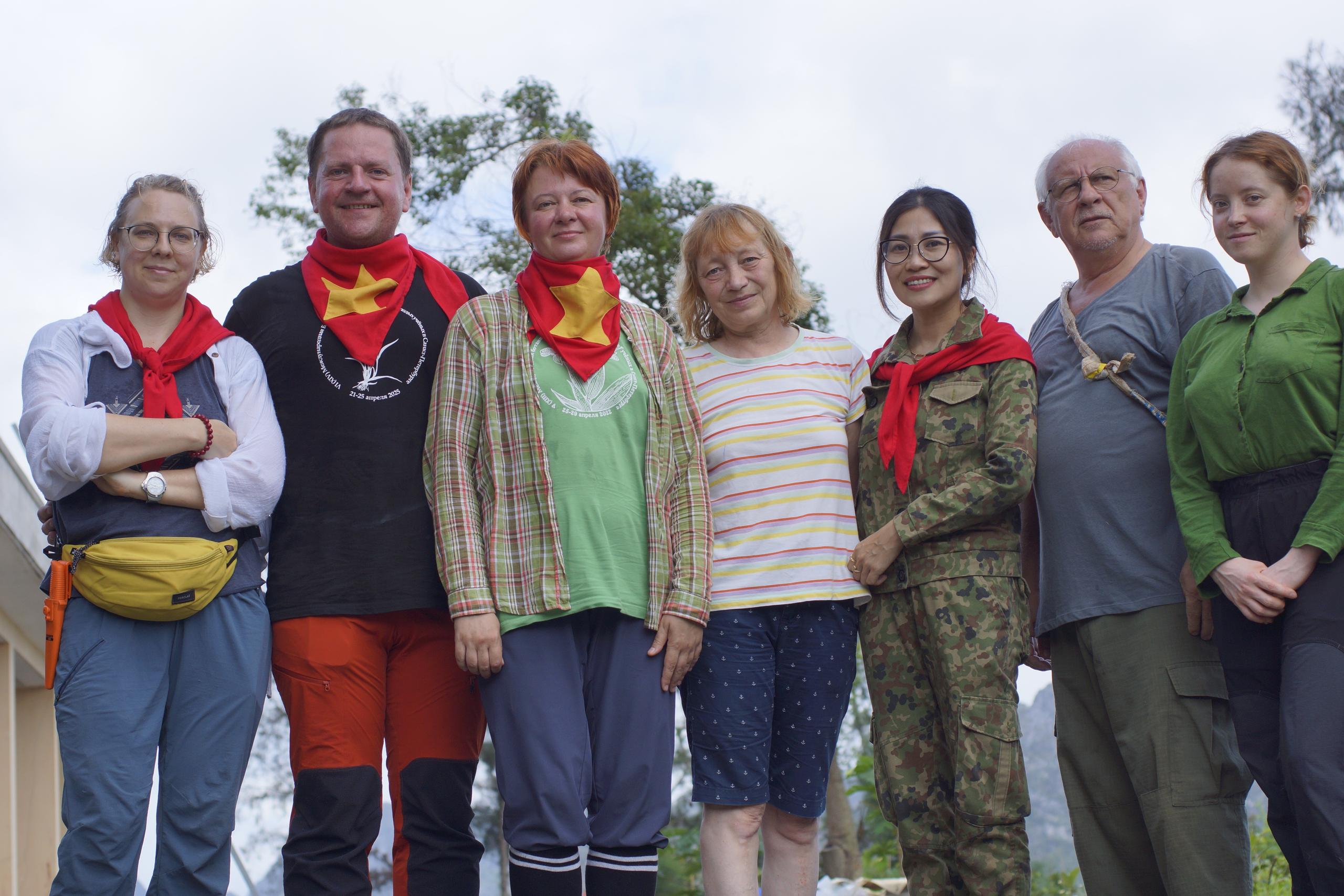 Reading Orchids of Vietnam in Color and Graphics, one sees behind its illustrated pages a long process of building knowledge: searching in the field, recording habitats, collecting and comparing specimens, describing characteristics, reviewing names, and incorporating published findings. For researchers, the book is a reference and a starting point for further questions about orchid taxonomy, distribution, and ecology. For conservation practitioners and nature lovers, it provides a scientifically grounded introduction to the richness of Vietnam’s orchids.
For more than four decades, Prof. Leonid V. Averyanov has returned to Vietnam’s forests to study its orchids and other plants. His persistence suggests a deep affection for the country’s natural world, seemingly present in the photographs, drawings, and careful notes throughout this monograph. In the work of Averyanov and his colleagues, the beauty of orchids is presented alongside the knowledge needed to identify species, understand their habitats, and support conservation. The book thus encourages interest in Vietnam’s biodiversity and demonstrates the value of sustained research cooperation.
References
[1] Monograph, introduction, pp. 3–7: copy supplied by the reader. The figure of 1,391 species follows this copy; the Komarov Institute’s online catalogue lists 1,390 species.
[2] Komarov Botanical Institute: monograph catalogue and L.V. Averyanov profile. https://binran.ru/science/publikatsii/monografii/
[3] Vietnam National University of Forestry, 3 June 2022: Meeting with Prof. Leonid V. Averyanov. The publication and new-species figures reflect information available in 2022.
[4] Averyanov et al. (2013). Vietorchis furcata… Taiwania 58(4): 251–256. DOI: 10.6165/tai.2013.58.251
[5] Nuraliev et al. (2019). Towards inventory of non-photosynthetic plants in Vietnam: a progress report. Wulfenia 26: 147–154.
[6] Samigullin et al. (2024). Phylogenetic position and plastid genome structure of Vietorchis… Frontiers in Plant Science 15:1393225. DOI: 10.3389/fpls.2024.1393225