Vietnam-Russia Tropical Center Inaugurates Laboratory for Epidemic Prevention and Control
11/09/2026On the evening of September 9 in Hanoi, the Vietnam-Russia Tropical Center held an inauguration ceremony for its Laboratory for Epidemic Prevention and Control. The ceremony was co-chaired by Senior Lieutenant General Nguyen Truong Thang, Member of the Party Central Committee, Member of the Standing Committee of the Central Military Commission, Deputy Minister of National Defence, Chairman of the Vietnamese Subcommittee and Co-Chairman of the Intergovernmental Coordinating Committee for the Vietnam-Russia Tropical Center; and Ms. Anna Yurievna Popova, Head of the Russian Federal Service for Surveillance on Consumer Rights Protection and Human Well-Being (Rospotrebnadzor).
Notably, General Secretary of the Communist Party of Vietnam and President of the Socialist Republic of Vietnam To Lam and President of the Russian Federation Vladimir Putin witnessed the ceremony via videoconference from Moscow during Party General Secretary and State President To Lam’s State visit to the Russian Federation. The event marked an important milestone in scientific and technological cooperation between Vietnam and the Russian Federation, while also reflecting the special attention that the senior leaders of both countries have given to the development of the Vietnam-Russia Tropical Center.

 Party General Secretary and State President To Lam and Russian President Vladimir Putin witness the inauguration ceremony for the Laboratory for Epidemic Prevention and Control via videoconference from Moscow.
In his remarks, Russian President Vladimir Putin affirmed that the laboratory in Hanoi is Vietnam’s most modern and largest facility in the field of epidemic prevention and control. The laboratory will employ Russian technologies and methodologies to help protect the lives and health of the Vietnamese people while enhancing the scientific and technological capacity of the Vietnam-Russia Tropical Center.
Speaking via videoconference from Moscow, Party General Secretary and State President To Lam emphasized that the facility’s greatest value lies not only in its modern equipment, but also in its capacity for early detection and warning and its ability to provide scientific evidence to support policymaking and the implementation of epidemic prevention and control measures, thereby protecting the health of the people and the armed forces.
The Party General Secretary and State President commended the efforts of the agencies, organizations, officials and experts of both countries throughout the construction of the facility. He also highly appreciated Rospotrebnadzor’s technical assistance, technology transfer, personnel training and provision of equipment. The project stands as vivid proof of the effectiveness of scientific and technological cooperation between Vietnam and the Russian Federation in preventive medicine and public health protection.
Speaking at the ceremony, Senior Lieutenant General Nguyen Truong Thang affirmed that the traditional friendship and Comprehensive Strategic Partnership between Vietnam and the Russian Federation have been carefully cultivated by generations of leaders and the peoples of both countries and have continued to grow stronger. Within this broader relationship, the Vietnam-Russia Tropical Center has stood as an enduring symbol of scientific and technological cooperation between the two countries for nearly four decades.
According to Senior Lieutenant General Nguyen Truong Thang, the inauguration of the Laboratory for Epidemic Prevention and Control is the result of effective cooperation between the Vietnam-Russia Tropical Center and Rospotrebnadzor. It also reflects the attention of the senior leaders of both countries to strengthening the Center’s research capacity and expanding cooperation in practical fields that connect scientific research with the protection of human health.
On behalf of the leadership of Vietnam’s Ministry of National Defence, Senior Lieutenant General Nguyen Truong Thang expressed his sincere gratitude to President Vladimir Putin, the Government of the Russian Federation and Rospotrebnadzor for providing modern equipment, training personnel and transferring technology, thereby contributing to the enhancement of the Vietnam-Russia Tropical Center’s scientific research capacity. He also expressed confidence that the Center would operate and utilize the laboratory effectively and continue to serve as a bridge for scientific cooperation between Vietnam and the Russian Federation in epidemic prevention and control research.
Speaking at the event, Ms. Anna Yurievna Popova affirmed that the Laboratory for Epidemic Prevention and Control at the Vietnam-Russia Tropical Center is a project of special significance that will help establish the Center as a regional research institution in the field of epidemiology.
The Head of Rospotrebnadzor emphasized that the transfer of the Russian Federation’s advanced epidemiological technologies would provide an important foundation for Vietnam to develop its own capacity to prevent and control infectious diseases and respond more effectively to emerging epidemic threats.
As infectious diseases continue to develop in complex and unpredictable ways worldwide, the commissioning of the Laboratory for Epidemic Prevention and Control is particularly significant for Vietnam, a country characterized by a tropical monsoon climate and rich biodiversity.
The laboratory will strengthen the research capacity of the Vietnam-Russia Tropical Center, enabling it to undertake specialized scientific research in epidemiology, disease surveillance and detection, and epidemic risk assessment. It will also support personnel training, the development of scientific databases and the establishment of stable, long-term research programmes in biosafety and biosecurity.
Strengthening Cooperation and Ensuring Effective Utilization of the Facility
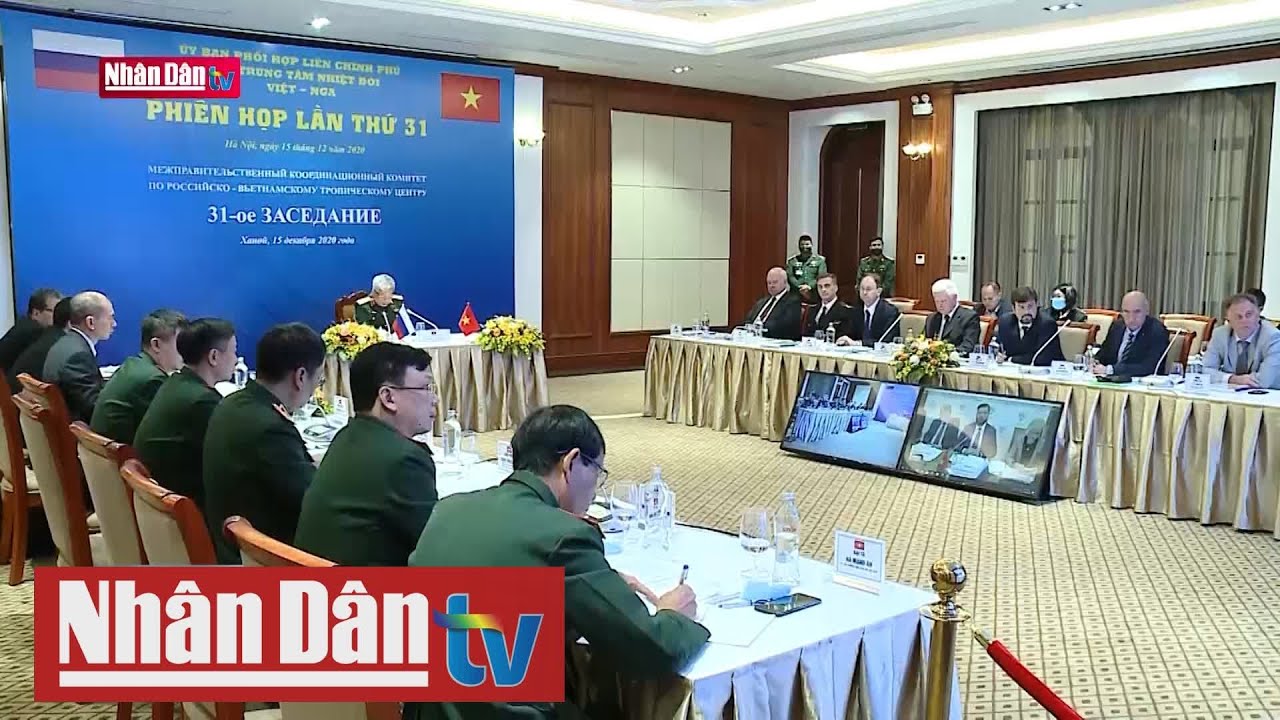
Earlier, on the afternoon of September 8, the Vietnam-Russia Tropical Center held a working session with Ms. Anna Yurievna Popova and the Rospotrebnadzor delegation to discuss future cooperation and the effective operation and utilization of the Laboratory for Epidemic Prevention and Control following its commissioning.
At the working session, Major General Dang Hong Trien, General Director of the Center, affirmed that Rospotrebnadzor has, over many years, remained a trusted partner of the Center, providing practical support in epidemiological research, personnel training and technology transfer. This trust and effective cooperation have contributed to the increasingly substantive and sustainable relationship between the two organizations.
The Director General emphasized that the inauguration of the Laboratory for Epidemic Prevention and Control was an event of special significance during Party General Secretary and State President To Lam’s State visit to the Russian Federation. It was also a great honour for the Center, as the ceremony was directly witnessed by the senior leaders of both countries.
Regarding future cooperation, Major General Dang Hong Trien proposed that the two sides continue to promote in-depth research on infectious diseases in tropical conditions; strengthen the implementation of research projects at the Center once the laboratory is licensed to operate; explore the possibility of assessing and recognizing the laboratory in accordance with Russian professional standards; extend the assignments of Rospotrebnadzor experts in Vietnam during the initial phase of the laboratory’s operation; and jointly develop and share a common database on infectious diseases in tropical conditions, in accordance with the laws and regulations of each country and relevant bilateral cooperation agreements.
The inauguration and commissioning of the Laboratory for Epidemic Prevention and Control further affirm the role of the Vietnam-Russia Tropical Center as an institution under the Ministry of National Defence and an important bridge for scientific and technological cooperation between Vietnam and the Russian Federation.
The facility will gradually strengthen the Center’s capacity for research, surveillance, early warning, forecasting and response to infectious diseases, effectively contributing to the protection of the health of the people and the armed forces and to the safeguarding of national defence and security in the new context.